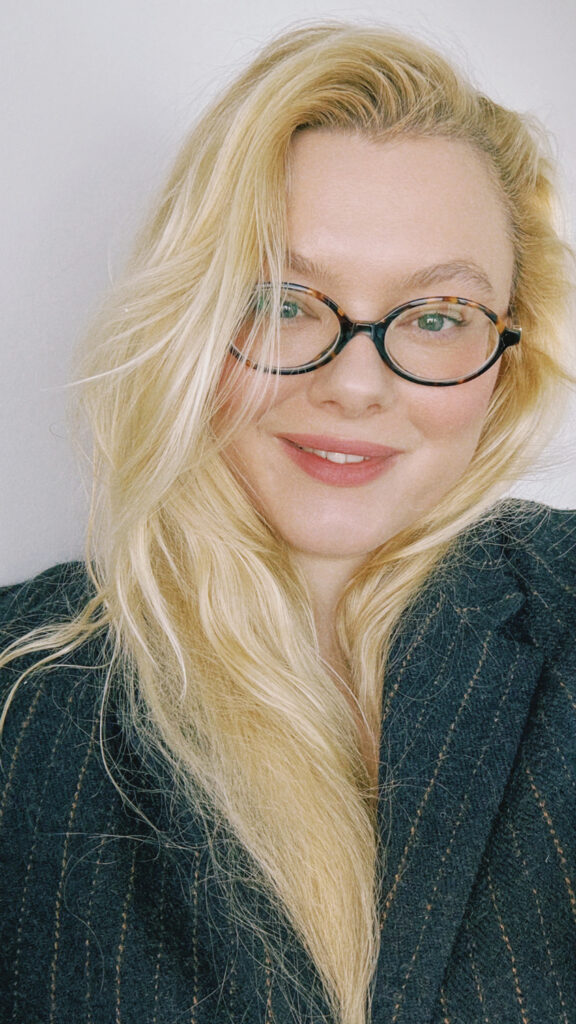
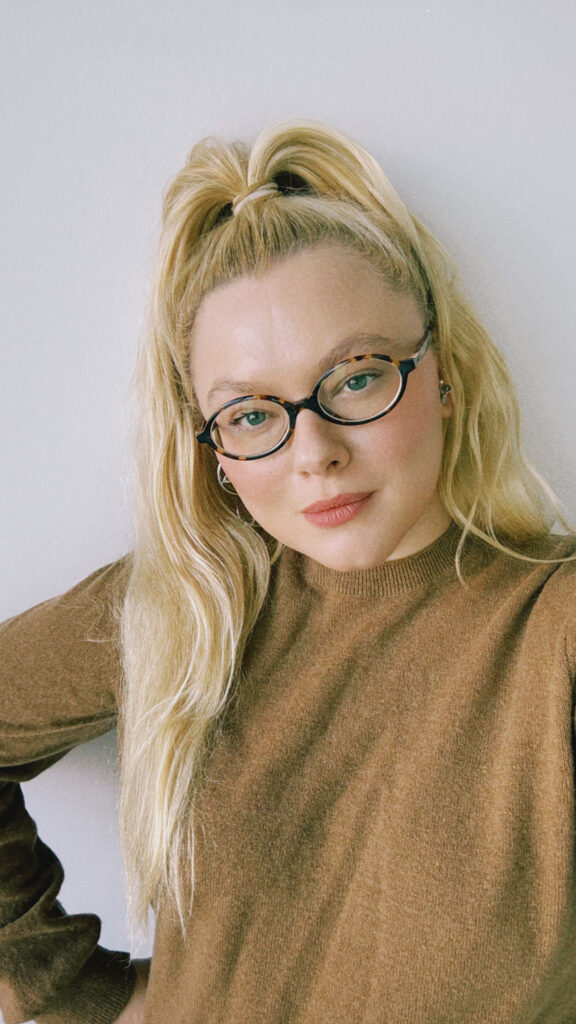
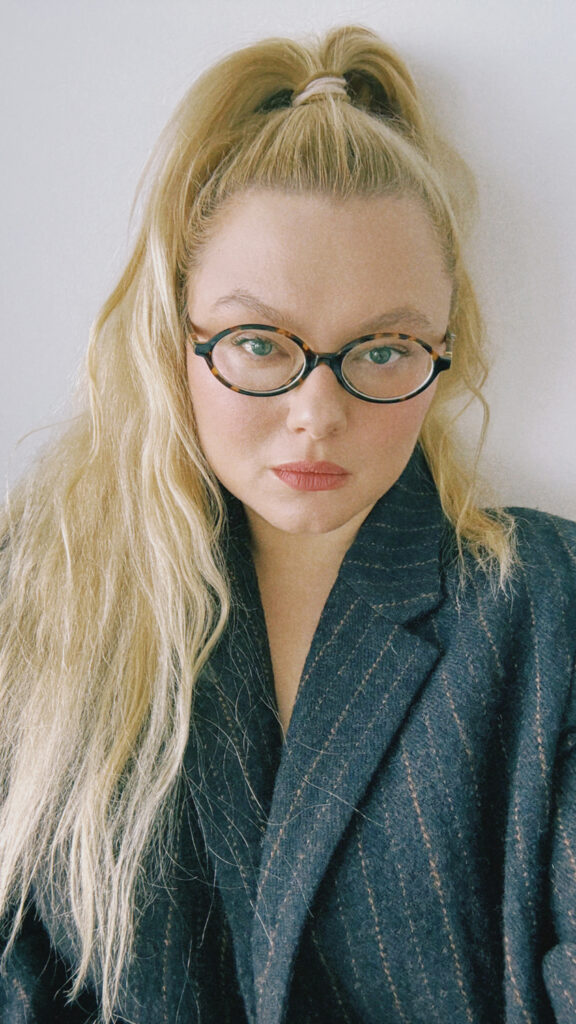
Do you remember the moment you first realized that the camera was your way of speaking to the world?
Absolutely. I remember the first time I felt that pull—I just wanted to capture what I saw in my mind. In school, I had a simple film camera, and I started photographing friends, creating little worlds for them, dressing them up, helping with poses. That’s when I realized I wanted to do this all the time. Photography wasn’t just about making a “pretty picture” – it was about playing with reality. It felt almost like magic: turning an ordinary day into a story.
In the beginning, what drew you most to visual work – beauty, emotion, people, atmosphere?
From the very start, I was drawn to showing the beauty of people—yes, in the glossy sense too. I loved experimenting with style, color, and light, but always staying true to the character of my subjects and highlighting their best sides. Over time, I realized this approach works perfectly in fashion as well, where you’re showing the character of the product, intertwined with the human element. Today, it’s that border between personality and image that inspires me the most.
But in daily life, I’m a bit like Steve Jobs—I love simplicity and comfort, though I admit, I’m obsessed with color.
Looking back at your early projects, what do you see—naivety or boldness?
Both, actually. I see a naivety that I now almost envy, paired with boldness. It was a time of endless experiments, mistakes, and intuitive decisions. There wasn’t much structure yet, but “my voice” was already emerging: favorite colors, signature types, moods. That foundation is what shapes how I shoot today. Sometimes, I even try to return to that mindset to reinvent myself.
Moving is not just about a new place, but a new rhythm of life. How did being in Toronto change you?
Arriving in Toronto, I suddenly felt like the creative self I once knew had disappeared. It was as if I had to start over—from style to language, even my inner rhythm.
But over time, that feeling became a point of rebirth. I realized the value of my experience, my eye, my ability to see people and craft visual stories. Moving became my second university—it deepened my vision, slowed my pace, and sharpened my focus.
Was there a moment when you felt truly at home in the new city?
That feeling comes in waves. Sometimes it happens during a shoot—when everything aligns: people, energy, light. Or when someone approaches me for a visual solution they didn’t even anticipate. In those moments, I know I’ve hit the mark.
Toronto isn’t just a new city for me—it’s a space for growth. Especially after winning the ELEE Canada competition, I felt that I no longer have the right to lower the bar. That’s what keeps me motivated!
Does the city itself inspire you, or do you seek visual quiet amidst the noise?
Toronto isn’t exactly a haven of visual silence, but there are little pockets of minimalist fashion and culture. What inspires me most are the people—this incredible mix of cultures, faces, and characters. Every neighborhood has its own visual code, and inspiration literally seeps from the cracks in the pavement. Mixing fashion with the streets is my favorite thing to do. I love finding models through spontaneous encounters and compliments—often that’s where the magic starts.
What exactly do you shoot, and why? What draws you to these stories?
Currently, I focus on portraits, headshots, and fashion—campaigns, catalogs, lookbooks.
In portraits, I’m drawn to character, energy, micro-movements. I always start with a conversation, trying to understand what matters to my client, their inner intent, their goal. Unexpected ideas often emerge from these dialogues. The key is that the person is open to me.
In fashion, I love building a world around the product, crafting a visual story that the viewer believes in. Often I volunteer for young brands and models—it’s my way of contributing and giving emerging talent a platform.
How do you choose your subjects or clients—by aesthetic, energy, intuition?
I adore photographing women, and I think it shows in my work. My visual signature is soft light, pastel tones, sensuality, and natural confidence.
I’m fascinated by revealing feminine energy—without clichés, with respect and attention. I work with women of all ages and professions, and every session feels a bit like therapy: moments when someone sees themselves in a way they never have before. I show them the beauty I see in my imagination.
Do you have a visual signature that makes your work instantly recognisable?
Yes. Soft light, pastel tones, attention to human energy. Even a simple scene becomes unmistakably mine when it carries that vibe—femininity, ease, emotional truth, in collaboration with the subject. The same goes for campaigns: a stylish presentation that brings the product to life. I love creating that spark.
What would you say are your strongest skills: lighting, composition, capturing the moment, or drawing out the person?
My strongest skill is seeing the project as a whole. I don’t just photograph; I think like a creative director. I communicate extensively with clients, conduct research, build moodboards, and plan color, poses, and the full story.
This approach lets me focus on concept execution during shoots. I enjoy mixing fashion or jewelry campaigns with family sessions or headshots—it keeps ideas fresh and unexpected.
For you, what is the ideal shot—emotion, balance, or a fleeting moment captured on the fly?
The ideal shot isn’t just a captured moment. It’s when chemistry, openness, and trust appear between me and the subject. When they stop “posing” and just exist. That’s when magic happens, and the image feels alive, timeless. In fashion, this principle multiplies with concept—then, and only then, do we get a result unlike anything else.
When you envision a shoot, where do you start—idea, color, story?
Almost always, it begins with the person—or the brand, if there’s a story behind it. Everything emerges from conversation, understanding what the person wants to communicate through their image or product.
Then comes research, strategy, moodboards, casting. I’m deeply involved in every step because it’s not just about taking beautiful pictures—it’s about building a coherent system of meaning and visual solutions. Every detail serves the story.
What does modern visual sensitivity mean to you, and how do you sense it evolving?
To have a well-developed visual eye is crucial, but you have to work with it carefully—otherwise, you risk recycling what’s already been done. I hate being asked to copy someone else; it feels suffocating. I always know I can create something new.
Understanding trends is necessary, but staying true to your style is even more important.
What are you most curious to explore right now—theme, mood, sensation?
I’m exploring the Canadian fashion scene—watching how brands find their visual voice and figuring out how I can help them sound stronger. Creating visual strategies, balancing commerce with aesthetics—that excites me as much as the actual shoot. Seeing a brand I’ve worked with start to see its product differently—that’s pure magic for me.
Looking at your recent projects, do they feel like they reflect the person you are today?
Absolutely. My recent work reflects who I am today—and who I’m becoming. I sense a new scale ahead: larger teams, bold collaborations, projects where my vision can resonate even louder.
It’s vital for me that my style remains fearless, recognizable, and alive, even as my technical skills sharpen. Every new shoot is a step forward in strength, expression, and meaning.
If you could tell yourself something at the start of your journey—about work, courage, or change—what would it be?
Be bolder, and be persistent. I used to wait for the “perfect moment,” but it doesn’t exist. Only action counts. Taking steps—one after another, without guarantees—leads to the most beautiful results. That’s the quality I value most in myself and aim to carry forward.